**Merry Christmas and Happy New Year to all our valued customers!**
Our offices will have adjusted hours for the Christmas and New Year holidays. We will be open for half-days on December 24th and 31st, and CLOSED from December 25th to 28th. We will resume normal operations on December 29th and REOPEN after New Year’s on January 2nd.
A Complete Guide to the Best Peptides for Heart Health
PG Site Admin
Table of Contents
What Are the Best Peptides for Heart Health New Zealand?
The best peptides for heart health are B7-33, AMPK peptides, and AICAR. These peptides stand out because they link to core pathways that influence how the heart manages energy, maintains steady blood flow, and responds to stress in research settings. Their role in these key areas makes them the primary peptides used in deeper studies of heart health.
B7-33, AMPK, and AICAR provide researchers with clear starting points for examining heart function and cellular balance. They remain the primary choices in many studies focused on understanding how peptide signals support better heart function.
Each peptide connects with a different area of heart biology, so examining them individually helps reveal the unique advantages they bring to cardiovascular research.
Explore B7-33 from PharmaGrade Store New Zealand, a peptide linked with RXFP1 activity that helps support advanced work on vascular tone and tissue signaling.
How does B7-33 affect heart function?
B7-33 is one of the peptides for heart health that researchers study because it activates the RXFP1 receptor, a pathway linked with vascular relaxation and reduced tissue stress. In research, this activation helps scientists observe how blood flow improves when vessels relax and how the heart responds when pressure rises.
New Zealand Studies using controlled models show that B7-33 may limit fibrosis, support healthier tissue structure, and reduce damage in ischemia-reperfusion scenarios. These effects help researchers follow how the heart protects itself during strain and how peptide signals influence recovery.
B7-33 highlights how protective signals shape heart behavior, but understanding heart health also requires exploring how the heart maintains energy under demanding conditions. This is where AMPK becomes essential.
What Role Does AMPK Play in Heart Health?
AMPK plays a vital role in heart health because it works as the heart’s energy regulator. When energy demand rises, AMPK activates pathways that increase glucose uptake and fatty acid oxidation. This helps cardiac cells meet higher energy demands during stress or increased workload, making AMPK among the most critical peptides for heart health.
New Zealand Researchers also link AMPK activation to protection against harmful changes such as cardiac hypertrophy and fibrosis. In lab studies, AMPK activation reduces stress on the heart muscle, maintains metabolic balance, and supports cellular survival under pressure.
While AMPK shows how the heart adjusts its energy use, AICAR provides a closer look at how these adjustments begin and how energy pathways switch on during challenging moments.
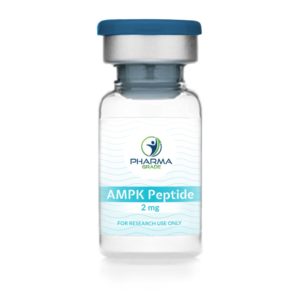
Discover AMPK peptides from PharmaGrade Store New Zealand, tools used in studies centered on cellular energy balance and the heart’s response to changing demands.
How Does AICAR Activate the Heart’s Energy Pathways?
AICAR activates the heart’s energy pathways by turning into ZMP inside cells, a molecule that signals AMPK to switch on. When AMPK is activated, it increases ATP production, supports healthier glucose use, and boosts fatty acid oxidation. These actions help the heart manage higher energy demand during stress, which is why AICAR remains one of the leading peptides for heart health in metabolic research.
New Zealand Studies also show that AICAR can influence mitochondrial activity and help the heart recover energy after strain. In several models, AICAR reduced tissue stress, improved metabolic balance, and supported stronger cell survival. Because it affects both AMPK-linked and AMPK-independent pathways, AICAR remains an important tool in heart health research.
These findings show that each peptide interacts with the heart differently, creating separate lines of evidence that contribute to a broader understanding of cardiac behavior.
Check out AICAR from PharmaGrade Store New Zealand, a peptide valued for its ability to model AMPK pathway activity and support deeper metabolic investigations.
How Do These Peptides Influence Heart Cells in Different Ways?
These peptides for heart health influence heart cells in different ways because each one targets a unique part of how the heart maintains balance. B7-33 gives researchers a way to observe changes linked to protective signals and tissue organization, providing insight into how heart cells respond when their environment shifts or when support signals increase.
AMPK peptides and AICAR highlight a different side of heart biology. They help scientists observe how heart cells coordinate activity, stay steady under changing conditions, and adjust their workload during periods of higher demand. These differences show how each peptide provides distinct insights into heart cell behavior and the broader factors that shape heart health in research.
With these differences in mind, comparisons become easier to see, especially when looking at how each peptide aligns with specific research goals.
Which Peptide Is Best for Heart Health?
Choosing the best peptide for heart health depends on the focus of the study. Each peptide highlights a different layer of heart function, so scientists select the one that aligns with the pathway or behavior they want to track.
Peptide Comparison Table
Peptide
What It Helps Researchers Study
Why It Matters for Heart Health
B7-33
RXFP1 activity, protective signals, changes in tissue structure
Helps explore vascular relaxation, reduced stress on heart tissue, and how cells respond to support signals
AMPK Peptides
Energy demand response, nutrient use, workload adjustments
Shows how the heart maintains energy balance, stays steady under pressure, and avoids harmful metabolic shifts
AICAR
AMPK-linked and AMPK-independent metabolic changes, mitochondrial behavior
Helps map how cells recover energy, protect themselves during strain, and maintain stable function when oxygen or fuel is limited
These comparisons offer a broader view of how peptide-based tools are shaping current cardiovascular research and where this field may move next.
Future of Peptides for Heart Health
Peptides for heart health continue to shape new research directions as scientists look for better ways to understand how the heart adapts, repairs, and protects itself. As studies grow, B7-33, AMPK peptides, and AICAR help researchers explore layers of heart biology that were harder to measure in the past. These tools open the door to stronger insight into cardiac energy control, tissue support, and long-term stability.
The future of this field looks promising. New studies keep uncovering pathways linking peptides to deeper heart activity, giving scientists more clues and reasons to explore them further. As science advances, peptides for heart health may reveal even clearer markers that guide stronger research, better models, and greater hope for future discovery.
References:
[1] Devarakonda T, Mauro AG, Guzman G, Hovsepian S, et al. B7-33, a Functionally Selective Relaxin Receptor 1 Agonist, Attenuates Myocardial Infarction-Related Adverse Cardiac Remodeling in Mice. J Am Heart Assoc. 2020 Apr 21;9(8):e015748.
[2] Heidrich F, Schotola H, Popov AF, Sohns C, et al. AMPK – Activated Protein Kinase and its Role in Energy Metabolism of the Heart. Curr Cardiol Rev. 2010 Nov;6(4):337-42.
[3] Choksey A, Carter RD, Thackray BD, Ball V, et al. AICAR confers prophylactic cardioprotection in doxorubicin-induced heart failure in rats. J Mol Cell Cardiol. 2024 Jun;191:12-22.
Frequently Asked Questions
Do peptides for heart health affect blood pressure?
Peptides for heart health can affect blood pressure by acting on pathways that relax or stabilize blood vessels. B7-33 connects with signals that ease vessel tension, while AMPK-linked peptides support nitric oxide activity. These actions help show how vascular tone shifts in controlled models and how pressure responds under different conditions.
Can peptides for heart health support heart aging?
Peptides for heart health can support aging-related heart health studies by targeting energy balance, stress regulation, and tissue stability. AMPK-linked peptides help maintain steady metabolism, while other peptide systems reduce changes linked with age-related decline. These effects make them helpful in understanding how the heart adapts and slows structural stress over time.
Are peptides for heart health natural or synthetic?
Peptides for heart health can be natural or synthetic. The heart uses natural peptides, such as natriuretic peptides and relaxin, to regulate pressure and balance. Synthetic options, such as B7-33 or AMPK-focused tools, help highlight specific pathways. Both types give researchers controlled ways to study key heart functions.
Can peptides for heart health target inflammation?
Peptides for heart health can target inflammation by acting on pathways that calm stress and control tissue changes. B7-33 links with signals that ease fibrosis, while AMPK-related peptides, including AICAR, help lower inflammatory markers in controlled models. These actions make them helpful in examining inflammation’s impact on heart stability.
Do peptides help prevent heart failure?
Peptides can help prevent heart failure in controlled studies by acting on pathways that manage pressure, remodeling, and energy use. Natriuretic peptides counter fluid strain, AMPK-linked peptides support steadier metabolism, and relaxin-type signals ease structural stress. These effects help map how heart failure develops and what slows its progression.
ALL PRODUCT INFORMATION AND ARTICLES ON THIS SITE ARE FOR EDUCATIONAL PURPOSES ONLY
DISCLAIMER: All products sold by PharmaGrade.Store are for research and laboratory use only. These products are not designed for use or consumption by humans or animals. They are not to be classified as a drug, food, cosmetic, or medicinal product and must not be mislabelled or used as such. By purchasing from our Website the buyer accepts and acknowledges the risks involved with handling of these products. All articles and product information provided on this Website are for informational and educational purposes only. Handling and use of these products should be restricted to suitably qualified professionals.
Boost Wellness with Hexarelin & CJC-1295 No DAC New Zealand Peptides are one of the most essential components of the human body. They regulate numerous biological processes and can be an effective tool in aiding
Impact of Thymosin Alpha-1 & LL-37 New Zealand on Immune Health The human immune system is the body’s natural defence mechanism against pathogenic invaders. It is a complex network of organs, cells, and molecules that
Peptide Therapy New Zealand: Healing Tendonitis & Repairing Tissue A comprehensive guide to peptide therapy for tissue healing, with a focus on the effectiveness of potential peptide therapies for tendonitis treatment, tissue regeneration, joint pain,
HCG New Zealand Boosts Fertility for Men and Women: A Complete Guide HCG boosts fertility: Fertility is a topic that’s always evolving, with new treatments and discoveries constantly emerging. One such breakthrough is the use