**Merry Christmas and Happy New Year to all our valued customers!**
Our offices will have adjusted hours for the Christmas and New Year holidays. We will be open for half-days on December 24th and 31st, and CLOSED from December 25th to 28th. We will resume normal operations on December 29th and REOPEN after New Year’s on January 2nd.
The Power of KPV and BPC-157 Peptides for Gut Ailments
PG Site Admin
Table of Contents
Unlock Gut Health with KPV and BPC-157 Peptides New Zealand
A healthy gut is essential for overall wellness. It helps the body digest food efficiently, absorb nutrients, and maintain a strong immune system. When the gut functions well, energy levels remain balanced, and the body recovers faster from stress or minor injuries. Despite this, millions worldwide face gut-related challenges, including inflammation, ulcers, and impaired tissue repair.
To explore solutions, researchers are investigating peptides like KPV and BPC-157. In laboratory studies, these peptides show promising effects, helping to repair intestinal tissues, reduce inflammation, and support the gut’s natural barrier. Their ability to promote healing at the cellular level makes them an exciting focus for scientific research. These findings set the stage for understanding how KPV and BPC-157 specifically support gut health.
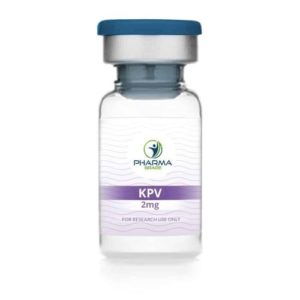
Explore KPV Peptide from PharmaGrade Store New Zealand, a small tripeptide that supports intestinal tissue repair and helps reduce gut inflammation for improved gut resilience.
How KPV and BPC-157 Peptides Support Gut Health?
In New Zealand laboratory studies, KPV shows anti‑inflammatory activity in intestinal cells by interacting with peptide transporters in gut tissue and reducing cytokine‑driven inflammation. This action may help preserve gut barrier integrity under stress conditions.
BPC‑157, a pentadecapeptide derived from gastric juice, has strong cytoprotective effects in animal models of intestinal injury, helping tissue adapt after anastomosis and supporting the healing of disrupted gut lining.
Together, these peptides influence key signals involved in intestinal inflammation and tissue resilience in preclinical settings, offering valuable models for research on gut barrier function and recovery. With this overview in mind, we can now explore KPV’s specific role in intestinal repair.
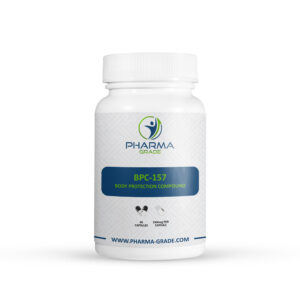
Discover BPC-157 Peptide from PharmaGrade Store New Zealand, a gastric-derived peptide that promotes gut tissue regeneration and strengthens intestinal barrier integrity.
How KPV Supports Intestinal Repair?
KPV helps intestinal tissues recover after injury by promoting epithelial cell migration and supporting mucosal repair. New Zealand Laboratory studies show that KPV primarily targets tissue repair pathways, enhancing mucosal structure and function. Its activity at the cellular level strengthens damaged tissue and accelerates the healing process, making it a valuable focus in preclinical studies.
Understanding KPV’s effect on tissue repair naturally leads to examining its role in regulating inflammation, as controlling inflammatory responses is essential for effective gut healing. Exploring this connection helps clarify how KPV contributes to overall gut resilience.
KPV’s Role in Gut Inflammation
KPV helps calm inflammatory responses in the gut by targeting key signaling pathways in epithelial and immune cells. In laboratory experiments, it reduces cytokine activity and lowers tissue irritation, providing a controlled model for studying gut inflammation. These effects highlight KPV’s specific role in modulating immune responses without affecting other repair mechanisms.
Studying KPV’s anti-inflammatory effects allows New Zealand researchers to understand how inflammation control supports tissue recovery. This focused perspective sets the stage for exploring BPC‑157, which primarily addresses tissue regeneration and barrier protection.
Role of BPC‑157 in Gut Tissue Healing
BPC‑157 promotes healing of the intestinal lining by supporting cell migration and tissue regeneration. New Zealand Laboratory studies show that it helps repair both the mucosal and muscular layers of the gut, accelerating recovery from injury. Its cytoprotective effects enhance tissue resilience and structural integrity, making it a central focus in experimental gut healing research.
Examining BPC‑157 in isolation allows scientists to understand its specific regenerative mechanisms. These insights are critical for studying tissue repair pathways and provide a clear model for evaluating how the gut recovers under stress.
How BPC‑157 Helps in Gut Barrier Protection?
BPC‑157 contributes to maintaining the gut’s natural barrier by strengthening tight junctions between intestinal cells and reducing permeability. Laboratory evidence shows that it protects the intestinal lining from stress or chemical irritation, preserving barrier integrity and supporting healthy gut function.
Focusing solely on BPC‑157 allows researchers to investigate how this peptide protects the barrier independently of other factors. This dedicated perspective is crucial for understanding the mechanisms behind gut barrier stability and resilience in preclinical studies. With these individual actions clarified, it’s insightful to consider how the peptides work together.
The Combined Effects of KPV and BPC‑157
In laboratory studies, KPV and BPC-157 work together to support gut healing. KPV helps reduce inflammation and calm immune responses, while BPC‑157 promotes cell migration and tissue repair. This combination allows researchers to simultaneously study both protective and regenerative effects in gut tissue.
By observing KPV and BPC-157 in preclinical models, scientists gain insight into how controlling inflammation and enhancing repair interact. The dual action of these peptides provides a clearer understanding of gut recovery mechanisms and highlights their complementary roles in supporting intestinal health in research settings. Recognizing these combined effects naturally leads to considering their future potential in gut health research.
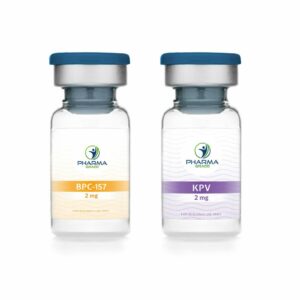
Explore the BPC-157 and KPV Stack from PharmaGrade Store New Zealand, a peptide combination that supports gut tissue repair, reduces inflammation, and enhances intestinal barrier function.
Future of KPV and BPC-157 Peptides in Gut Health
Research into KPV and BPC-157 continues to reveal their potential for supporting gut tissue repair, reducing inflammation, and maintaining barrier integrity in laboratory studies. As scientists explore their combined effects, these peptides provide valuable models for understanding how tissue regeneration and immune regulation interact.
The future of gut health research may benefit from further studies using KPV and BPC-157, offering insights into innovative strategies for intestinal recovery. By examining their mechanisms in controlled settings, researchers can deepen our understanding of gut resilience and advance experimental approaches to tissue healing.
References:
[1] Dalmasso G, Charrier-Hisamuddin L, Nguyen HT, Yan Y, et al. PepT1-mediated tripeptide KPV uptake reduces intestinal inflammation. Gastroenterology. 2008 Jan;134(1):166-78.
[2] Kannengiesser K, Maaser C, Heidemann J, Luegering A, et al. Melanocortin-derived tripeptide KPV has anti-inflammatory potential in murine models of inflammatory bowel disease. Inflamm Bowel Dis. 2008 Mar;14(3):324-31.
[4] Bajramagic S, Sever M, Rasic F, Staresinic M, et al. Stable Gastric Pentadecapeptide BPC 157 and Intestinal Anastomoses Therapy in Rats-A Review. Pharmaceuticals (Basel). 2024 Aug 17;17(8):1081.
Frequently Asked Questions
Do KPV and BPC-157 influence the gut microbiome?
There is no clear evidence that KPV and BPC-157 directly alter gut microbiome composition in controlled studies. Research on these peptides focuses on their effects on inflammation and tissue protection in gut models. They might indirectly support a healthier microbial environment by strengthening the barrier and reducing inflammation, but no studies have demonstrated direct microbiome modulation.
How long do KPV and BPC-157 remain active in gut tissue?
In laboratory models, KPV enters intestinal cells via specific peptide transporters and acts at the cellular level during the study period, but the exact tissue residence time is not well defined in the literature. BPC‑157 shows stability in gastric environments and resists breakdown in preclinical settings, allowing it to remain active long enough to promote protective effects in gut tissue.
Can KPV and BPC-157 mitigate damage from stress‑induced gut injury?
Experimental evidence suggests that BPC‑157 can help reduce gut injury caused by chemical irritants and stressors by supporting mucosal integrity and lowering epithelial permeability in animal models. While specific stress‑induced injury studies are limited, the peptide’s protective effects against epithelial damage in stressed environments have been documented, indicating potential benefit in such models.
Can KPV and BPC-157 be studied individually or only together?
KPV and BPC-157 can be studied individually in laboratory settings. Each peptide has distinct mechanisms. KPV often targets inflammation pathways, and BPC‑157 supports tissue repair and barrier stability, so researchers frequently assess them separately to isolate effects. Joint studies also help compare and understand the combined impact on gut-healing pathways.
How do KPV and BPC-157 support gut tissue repair?
KPV enters intestinal cells via peptide transporters and helps reduce inflammatory signaling, which facilitates a more stable environment for tissue repair. BPC‑157 promotes cell migration and regeneration, accelerating mucosal and epithelial recovery in injured gut tissue. Both peptides enhance healing pathways in preclinical models, providing insights into cellular mechanisms driving tissue repair.
ALL PRODUCT INFORMATION AND ARTICLES ON THIS SITE ARE FOR EDUCATIONAL PURPOSES ONLY
DISCLAIMER: All products sold by PharmaGrade.Store are for research and laboratory use only. These products are not designed for use or consumption by humans or animals. They are not to be classified as a drug, food, cosmetic, or medicinal product and must not be mislabelled or used as such. By purchasing from our Website the buyer accepts and acknowledges the risks involved with handling of these products. All articles and product information provided on this Website are for informational and educational purposes only. Handling and use of these products should be restricted to suitably qualified professionals.
Boost Wellness with Hexarelin & CJC-1295 No DAC New Zealand Peptides are one of the most essential components of the human body. They regulate numerous biological processes and can be an effective tool in aiding
Impact of Thymosin Alpha-1 & LL-37 New Zealand on Immune Health The human immune system is the body’s natural defence mechanism against pathogenic invaders. It is a complex network of organs, cells, and molecules that
Peptide Therapy New Zealand: Healing Tendonitis & Repairing Tissue A comprehensive guide to peptide therapy for tissue healing, with a focus on the effectiveness of potential peptide therapies for tendonitis treatment, tissue regeneration, joint pain,
HCG New Zealand Boosts Fertility for Men and Women: A Complete Guide HCG boosts fertility: Fertility is a topic that’s always evolving, with new treatments and discoveries constantly emerging. One such breakthrough is the use